Preferred Equity and Structured CRE Finance in 2026:
Preferred Equity and Structured CRE Finance in 2026: How Sponsors Are Closing the Capital Gap.
Preferred Equity and Structured CRE Finance in 2026: How Sponsors Are Closing the Capital Gap.
As refinancing pressure builds across commercial real estate, sponsors are turning to preferred equity and structured finance solutions to bridge capital gaps and complete transactions.
Commercial real estate capital markets are entering a new phase in 2026, one defined less by liquidity constraints and more by capital structure complexity.
While debt markets have shown modest improvement in recent months, the reality for many sponsors is that traditional financing alone is no longer sufficient to execute acquisitions, refinances, or recapitalizations. As loan proceeds remain constrained and underwriting standards stay disciplined, a growing number of transactions are requiring layered capital solutions to move forward.
The Growing Capital Gap in CRE Transactions
Across multiple asset classes, a consistent trend has emerged. There is a widening gap between senior loan proceeds and total capital required.
Several factors are driving this dynamic. Elevated interest rates continue to impact debt service coverage. Lenders remain conservative on loan-to-value and debt yield. Operating expenses have increased across many asset classes, particularly in multifamily and office. Transitional business plans also require additional reserves and flexibility.
Even with improving loan spreads, many deals today are underwriting to lower leverage levels, forcing sponsors to either contribute more equity or seek alternative capital sources.
Why Preferred Equity Is Gaining Momentum
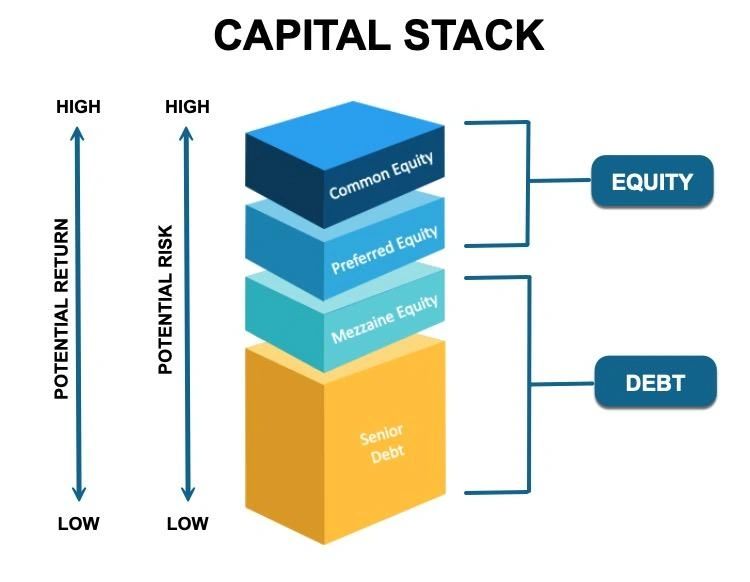
In this environment, preferred equity and structured finance solutions are becoming a critical part of the capital stack.
Preferred equity is increasingly being utilized to bridge the gap between senior debt and sponsor equity, enhance returns without fully diluting ownership through joint venture structures, provide flexibility in transitional business plans, and facilitate recapitalizations where existing debt cannot be fully refinanced.
Unlike traditional joint venture equity, preferred equity allows sponsors to retain greater control while still accessing the capital needed to execute their strategy.
At the same time, investors are attracted to preferred equity for its risk-adjusted return profile, typically positioned between senior debt and common equity in the capital stack.
A More Structured Approach to Deal Execution
Transactions in today’s market are no longer driven solely by leverage. They are driven by structure.
Sponsors are increasingly evaluating combinations of senior debt and preferred equity financing alongside bridge loans, and hybrid capital structures tailored to lease-up or repositioning strategies. Recapitalizations are also becoming more common as a way to reset the capital stack without requiring a full exit.
This shift reflects a broader evolution in the market, where capital partners are selected as much for their flexibility as for their pricing.
Where Opportunities Are Emerging
Despite ongoing challenges in certain sectors, capital continues to flow toward multifamily assets with stable or improving fundamentals, industrial and logistics properties with strong demand drivers, and select hospitality and niche asset classes with clear repositioning upside.
Office assets, while still facing structural headwinds, are also creating opportunistic entry points. These situations often require more creative capital structures to align risk and return expectations.
Looking Ahead
As the commercial real estate market continues to adjust, the ability to structure capital effectively will remain a key differentiator.
Sponsors who proactively address capital gaps, align with the right equity partners, and approach transactions with flexibility are better positioned to execute in today’s environment.
Preferred equity and structured capital solutions are becoming core tools in modern real estate finance. Understanding how to navigate the capital stack is essential to unlocking opportunities in 2026 and beyond.

Preferred equity capital for commercial real estate sponsors and investors. Capital. Relationships. Results.
This website is for informational purposes only and does not constitute an offer to sell or a solicitation of an offer to buy securities.